MUSICAL INSTRUMENTS

DRUMS

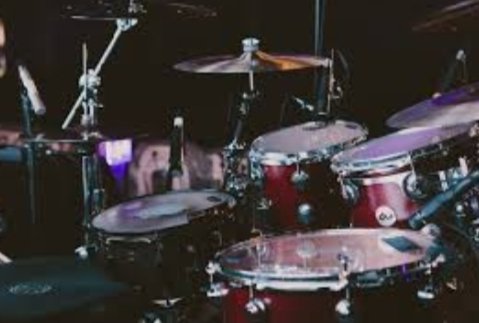
The drum is a member of the percussion group of musical instruments in the  Hornbostel-Sachs classification system, it is a membranophone.Drums consist of at least one membrane, called a drumhead or drum skin, that is stretched over a shell and struck, either directly with the player’s hands, or with a percussion mallet, to produce sound. There is usually a resonance head on the underside of the drum, typically tuned to a slightly lower pitch than the top drumhead. Other techniques have been used to cause drums to make sound, such as the thumb roll. Drums are the world’s oldest and most ubiquitous musical instruments, and the basic design has remained virtually unchanged for thousands of years.

Drums may be played individually, with the player using a single drum, and some drums such as the djembe are almost always played in this way. Others are normally played in a set of two or more, all played by the one player, such as bongo drums and timpani. A number of different drums together with cymbals form the basic modern drum kit.
GUITAR

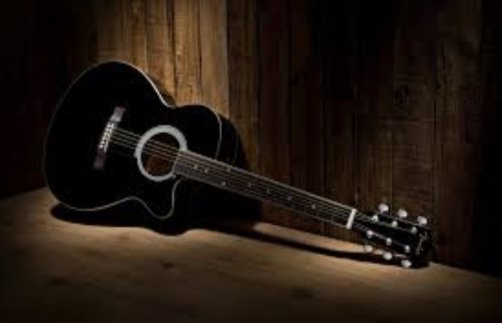
The guitar is a fretted musical instrument that usually has six strings.It is typically played with both hands by strumming or plucking the strings with either a guitar pick or the fingers/fingernails of one hand, while simultaneously fretting (pressing the strings against the frets) with the fingers of the other hand. The sound of the vibrating strings is projected either acoustically, by means of the hollow chamber of the guitar (for an acoustic guitar), or through an electrical amplifier and a speaker.

Guitars can be divided into two broad categories, acoustic and electric guitars. Within each of these categories, there are also further sub-categories. For example, an electric guitar can be purchased in a six-string model (the most common model) or in seven- or twelve-string models.

The guitar is a type of chordophone, traditionally constructed from wood and strung with either gut, nylon or steel strings and distinguished from other chordophones by its construction and tuning. The modern guitar was preceded by the gittern, the vihuela, the four-course Renaissance guitar, and the five-course baroque guitar, all of which contributed to the development of the modern six-string instrument.

VOILIN

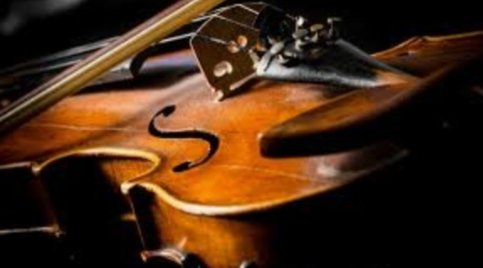
The violin, sometimes known as a fiddle, is a wooden string instrument in the violin family. Most violins have a hollow wooden body. It is the smallest and highest-pitched instrument in the family in regular use. Smaller violin-type instruments exist, including the violino piccolo and the pochette, but these are virtually unused. The violin typically has four strings, usually tuned in perfect fifths with notes G3, D4, A4, E5, and is most commonly played by drawing a bow across its strings. It can also be played by plucking the strings with the fingers (pizzicato) and, in specialized cases, by striking the strings with the wooden side of the bow (col legno).

The violin has been one of the most important of all instruments in classical music, for several reasons. The tone of the violin stands out above other instruments, making it appropriate for playing a melody line. In the hands of a good player, the violin is extremely agile, and can execute rapid and difficult sequences of notes.

Violins make up a large part of an orchestra, and are usually divided into two sections, known as the first and second violins. Composers often assign the melody to the first violins, typically a more difficult part using higher positions, while second violins play harmony, accompaniment patterns or the melody an octave lower than the first violins. A string quartet similarly has parts for first and second violins, as well as a viola part, and a bass instrument, such as the cello or, rarely, the double bass.

PIANO

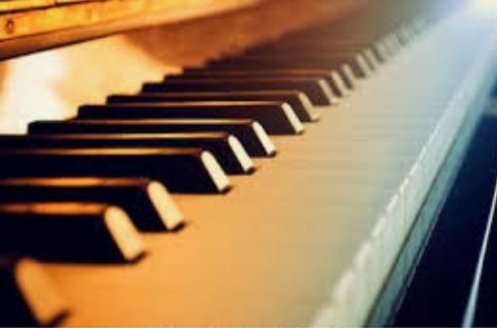
The piano is an acoustic, stringed musical instrument invented in Italy by Bartolomeo Cristofori around the year 1700 (the exact year is uncertain), in which the strings are struck by felt hammers. It is played using a keyboard, which is a row of keys (small levers) that the performer presses down or strikes with the fingers and thumbs of both hands to cause the hammers to strike the strings.

Modern acoustic pianos have two basic configurations, the grand piano and the upright piano, with various styles of each. There are also specialized and novelty pianos, electric pianos based on electromechanical designs, electronic pianos that synthesize piano-like tones using oscillators, and digital pianos using digital samples of acoustic piano sounds.